
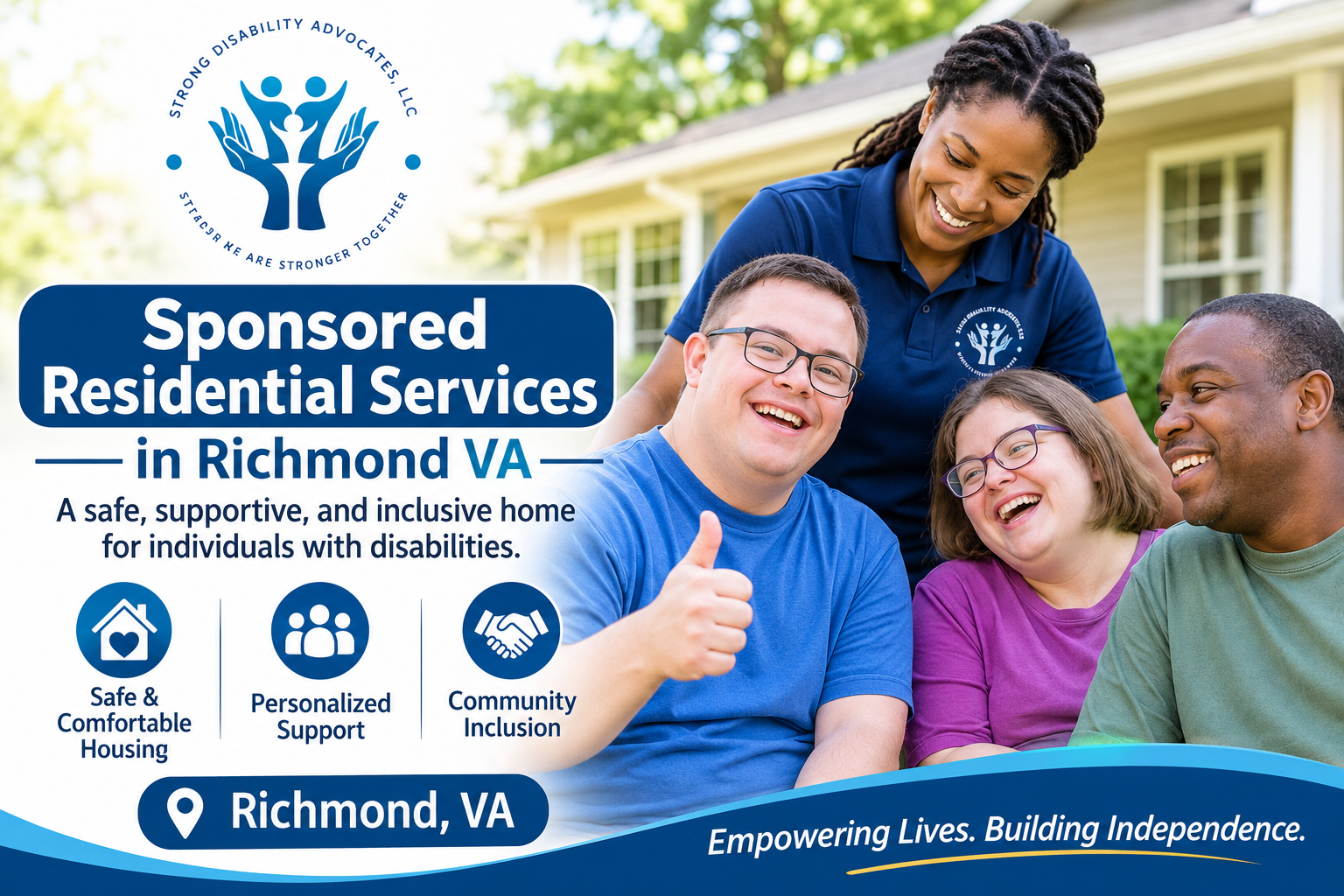
A house should be comfortable, free, enriching and nurturing. For adults with intellectual and developmental disabilities, the right way to live can make all these possible.
The question is, however, where do the families start? Is it more suitable to have a home with a family atmosphere or is a small bed group home more suitable? Families, what financial help is available and how can they find appropriate care?
Sponsored Residential Services in Richmond VA is a subject that often raises a number of questions within families. However, there are a number of programs available in the community that can provide people who are eligible some assistance and still keep them more independent.
Let’s explore the options and the considerations of families before making a choice.
Why community living makes a difference?
Independence does not necessarily equate to “doing it alone. It involves being able to make decisions, acquire skills and everyday living habits, and live a community life with assistance which is suitable.
HCBS services are designed to do just that. These programs provide support to those who are eligible, in the community setting.
Virginia’s Virginia Focuses on:
- Applying the principle of respecting personal choices/daily routine
- Ensuring privacy and ensuring rights of individual
- To build practical living skills
- Encouraging social relationships
- Supporting in community activities
Its mission is to improve people’s lives, allowing them to live freely without any restraints.
What Are Sponsored Residential Services in Richmond VA?
Picture a family environment which you can live in and feel supported, and yet make your own decisions. It’s the backbone of residential care that is sponsored.
Sponsored Residential Services in Richmond VA are a type of housing for people with developmental disabilities that is available in a sponsor’s home and provides individualized services from a licensed provider.
Care support can take many forms, such as personal care, household chores, communication skills, security, community involvement, and others, depending on the person’s needs and support plans approved.
This set up provides a home-like atmosphere instead of an institutional environment. It can also assist a person to build confidence with real-life experiences.
The intent is to offer more than just supervision. To promote participation, personal development and meaningful relationships.
Is Small Bed Group Home Right?
Some people like to live in a ‘family’ style home, some prefer to have a few people living in a house with themselves. A small Bed Group Home can provide a structured environment, with opportunities to interact socially and to develop day to day skills.
However, there are a few differences between group homes and sponsored residential homes.
| Feature | Sponsored Residential Home | Small Bed Group Home |
| Setting | Sponsor’s family home | Shared residential property |
| Support | Sponsor under a licensed provider | Residential staff |
| Environment | Family-style | Shared household |
| Focus | Individualized assistance | Residential care and skill developm |
Residential homes for children and youth are only sponsored in Virginia to house 2 children and group homes with 6 beds.
A small bed group home may be suitable for someone who likes to have shared routines or sponsored residential care may be suitable for someone who wants to be in a family setting.
How does a Medicaid Waiver Home Work?
Support services that take place in a person’s home can be costly. Medicaid waivers can help those who are eligible receive approved services, without having to completely fund them.
A Medicaid Waiver Home is a community setting that provides an eligible person with Medicaid authorized services under an applicable Medicaid waiver. But this doesn’t imply that Medicaid will cover rent, food or all household costs.
The state of Virginia has three Developmental Disabilities Waivers:
| Waiver | Main Purpose |
| Building Independence (BI) | Supports eligible adults living more independently |
| Family and Individual Supports (FIS) | Provides support in family and community settings |
| Community Living (CL) | Supports individuals with more extensive needs, including residential services |
It is particularly important for sponsored residential arrangements to be familiar with the Community Living Waiver as it is part of that.
Families who are interested in a Medicaid Waiver Home, should reach out to their local Community Services Board (CSB) to learn about eligibility, assessment and service authorization.
Why The Community Living Waiver Matters
The Community Living Waiver is a program to provide eligible individuals access to services that allow them to live in their communities.
Services can be provided such as:
- Sponsored residential support
- Personal assistance
- Community engagement
- Employment-related support
- Developing activities for everyday living skills
To be eligible the person needs to satisfy the requirements of a programme, to complete assessments and to have received authorisation for a specific service.
A waiver does not mean that child will be placed immediately in a residence. Arrangements should also be made to ensure that the provider is licensed and services are available to the family.
What Should Families Look for in a Residential Provider?
When selecting a home provider, more is needed than just looking at its appearance or location. Residents should be informed about the way families will be treated and what they can expect to encounter in their daily life.
When making your decision about Sponsored Residential Services in Richmond VA or a shared residence, pose these questions:
- Personal autonomy: Do residents have control over their eating, doing and living habits?
- Privacy: Do personal spaces and belongings are respected?
- Staff experience: Is there an appropriate training of sponsors and caregivers?
- Community access: Do community members have access to community activities?
- Regular communication encouraged: Is there any involvement in the family?
- Individual planning: Do services include individual needs and goals?
These questions support the family to see different arrangements that truly promote independence.
Learn more about the organization’s mission and commitment to disability advocacy by visiting the Strong Disability Advocates LLC website.
How HCBS Services Support Everyday Independence
Sometimes, it begins with as simple as making breakfast or picking out clothes or going to a local shop. The common experiences build confidence and skills. It is in this context that HCBS services are beneficial.
The support may be able to assist those who are eligible and authorized:
- Cook and do household chores.
- Develop communication and social skills.
- Take part in leisure activities.
- Manage personal routines.
- Decide with greater confidence and sense of self-assurance.
Effective HCBS services should be designed to maximize participation, not control a person’s life.
Each family has the opportunity to learn more about guidance on the Strong Disability Advocates LLC Medicaid Waiver Services page.
How Strong Disability Advocates LLC Helps Families
Information about disability programmes, residential accommodation and eligibility criteria may be confusing. Families may require support to determine appropriate services and next steps.
Strong Disability Advocates, LLC is dedicated to people who have been diagnosed with intellectual disabilities, developmental delays and autism spectrum disorders.
It has a personalized guidance, advocacy and support planning approach.
Final Thoughts
The choice of residential arrangement is more than just a place to live. It’s about building a house where people are free to develop their skills, feel safe and respected.
In Virginia, there are a number of services available for eligible people with developmental disabilities, ranging from community services to residential services. Families should be familiar with the Community Living Waiver and the different options for their family members’ housing, as well as the services that are available under the HCBS service delivery system.
Searching for the perfect home support for your family member? Contact Strong Disability Advocates LLC to talk about your needs and options for a life that may be more supportive and independent.
Frequently Asked Questions
What is Sponsored Residential Services Richmond VA?
The basic idea behind these services is to provide personalized assistance to an eligible person with developmental disabilities and to have them reside in a sponsor’s home. Support may be provided for personal care, daily living skills, safety and community participation.
Who is eligible for the Community Living Waiver?
People need to meet Virginia’s developmental disability, financial and level of care requirements. There is a local Community Services Board to assist with screening and assessment.
What are the differences between a small bed group home and sponsored residential care?
Small Bed Group Home is a residential setting for small groups of children with supervision. Sponsored residential care is provided in a family setting in a sponsor’s home.
Is a Medicaid Waiver Home covered by Medicaid?
Eligible persons may have their Medicaid cover authorized waiver services. However, the benefits of housing and household expenses are not automatically covered; families should seek out specifics.
What services are offered in HCBS?
HCBS services may include residential supports, personal assistance services, community supports, employment supports, and supports for daily living skills. Eligibility and support plan approval will determine availability.
Can families remain involved after residential placement?
Yes. Family communication and involvement can remain important parts of an individual’s support system. Personal privacy, preferences, and decision-making rights should also be respected.